Tuesday, November 20, 2012

40% Indian consumers research online before buying offline

Today, with approximately 13.7 crore internet users in the country, digital media has become a potential tool for consumer research before buying products and services offline. Moreover, consumers don’t only use this platform for search or social networking but also for utilitarian purposes. To understand the influence of internet on technology product purchases by buyers in-stores, Nielsen on behalf of Google India conducted a survey across 12 cities. The study interviewed 3,677 respondents outside 200 multi brand outlets and retail stores.
Google India’s Tech Shopper report claimed that over 40 per cent of the in-store purchasers in metros and Tier I and II cities use online research before making a decision and 69 per cent have already made up their minds about what model to buy and what not to before entering the store. For the record, the cities covered four metros, Chandigarh, Pune, Indore and Coimbatore for Tier I and Kanpur, Kochi, Vadodara and Bhubaneswar as part of Tier II cities. 86 per cent of the respondents included males across SEC A1 to SEC D and 92 per cent of the respondents were in the age group of 18 to 44 years out of which 34 per cent had already made the purchase.
Rajan Anandan, Managing Director and VP Sales Operations Google India

Rajan Anandan, Managing Director and VP Sales Operations Google India
The noticeable fact is that the maximum number of online purchase related researchers are in Tier II cities, which stands at a staggering 83 percent compared to metros which is 30 per cent lesser. Is it because of the lack of resources, middling incomes or the search for value for money? Even though the offline behaviour of consumers is changing due to the research done on the internet but is the e-commerce segment also making an impact on the buying behaviour? Rajan Anandan, VP and Marketing Director, Sales and Operations, Google India, says that the objective of the research was to understand offline purchasing behaviour. “E-commerce will grow but over the next three to four years most Indian consumers will do research online and they will buy offline. What has changed is that they have already made up their mind before they enter the store. Additionally, 70 per cent of Indian consumers today have made up their mind about the brand and model they want to buy before they walk into the store,” he adds.
With Google being a platform used by brands for SEM (Search Engine Marketing), how do brands leverage this factor to their benefit applying to consumer research and behaviour? Anandan has a different take on this aspect, he says that the spends in the industry is growing at a rate of 50 per cent and by 2015 the spends on this platform will cross Rs. 5,000 crore. Though he says that SEM is a very important part of the media mix of the more advanced advertisers in India today, most active brands, however, have multi communication online strategies. “It is not one platform that a brand needs to be on, search, social, video and mobile all come into play. Therefore, the more active brands especially in the technology category are present across multiple platforms and have very comprehensive paid earned strategies,” he adds.
About e-commerce he says that the segment is growing rapidly. “Industry sources write $ six billion as e-commerce revenue last year growing at 50 per cent, which means it will be $ nine billion plus next year and by 2015 it will be north of $ 30 billion,” he adds. E-commerce is growing but of a very small base, he says and further adds that out of the $ six billion ecommerce last year, travel was $ five billion and non travel was about a billion and electronics and technology was about a third of that.
According to the survey, more than 90 per cent of the users are looking for prices; about 55 per cent look for photos of the product and a little more than 20 per cent look for reviews online. The study also focuses on the price aspect of different products which buyers undertake. This shows that the research intensity increases for high value products. For example the research intensity increased when the price range exceeded Rs. 7,000 for mobile phones and Rs. 30,000 for laptops among others.
Medium of First AwarenessMetrosTier 1Tier 2
TV53%64%57%
Internet Ads23%17%12%
Newspaper Ads14%11%23%

According to Google, tablets are the fastest growing technology products in the search query growth category, bagging a 160 per cent compared to mobiles at 41 per cent. The top five brands that consumers search for online in the mobile category in descending order that Google claims is, Samsung, Nokia, iPhone, Sony and HTC. In the laptop category Dell leads followed by HP, Samsung, Lenovo and Acer and in the tablet category Apple iPad, Akash, Samsung, Micromax and HCL form the most researched names. This calibration of brands was done by Google for the period of January 2012 to October 2012.
Google also claims that tech products are the largest category after search in India. The report shows that there is a 39 per cent year-on-year growth from the period of January 2010 to September 2012. But is online research enough for a buyer? And is 39 per cent a large number for buyers who do internet research before buying? Conceivably that is the reason why there is still apprehension among the Indian consumer to buy tech products directly online. As per the claims of the report, 69 per cent of the customers like to have the touch and feel of the product after their ‘extensive’ research.

Source:http://pitchonnet.com/blog/2012/11/21/40-indian-consumers-research-online-before-buying-offline/

Thursday, November 1, 2012

A quarter of our teachers are very good. If you could make all the teachers as good as the top quarter, the India would sour to the top of that comparison. So can you find the way to capture what the really good teachers are doing?

It's amazing to me that more has not been invested in looking at how does that good teacher calm that classroom? How does that good teacher keep the attention of all those kids? We need to measure what they do, and then have incentives for the other teachers to learn those things.

Tuesday, October 23, 2012

New Media Marketing Consultant – Check Values First


Today, there are more media tools available today than ever before. They connect with consumers, deliver a message, and interact on a more personal level. Considering all the new media sources opening doors for businesses of all sizes to get their message across, navigation of the waters of social media and online marketing can be difficult. A New Media Marketing Consultant can help you to locate the media tools that are right for your business, and make the most of your efforts.
In addition to traditional media outlets, a New Media Marketing Consultant can also guide you through distribution of your message across:
• Use of articles, blogs and other written communication online
• Social networking sites such as Facebook, Twitter and LinkedIn
• Online video services such as YouTube
• Audio messages
How Does New Media Make a Difference? 
What do these new tools offer that traditional media do not? These tools are widely available to any business, not just those who can afford the high cost of television advertising – and they reach a wider audience, well beyond those who just read the newspaper or a specific magazine. New media marketing lets every business to readily access the same tools, and brings their message directly to the places where the audience is spending their discretionary time.
An effective New Media Marketing Consultant understands nuances in the changing marketplace and how all of the branches of new media distribution can truly create a level playing field for businesses small and large. No matter how your business is postured– whether newly formed or veterans of your industry, a New Media Marketing Consultant can help you distribute your message more effectively and reach your audience on new levels.
How New Media Distribution Moves Your Message 
Today, people of all ages are now turning to the internet for every purpose from medical advice to entertainment. The success of sites like Facebook and YouTube proves that people are using the internet to connect, to find information they need, and to discover new companies and products. Loyalty to a Brand is developed and expanded through Facebook Fan Pages, corporate pages where consumers can “like” their favorites and encourage their friends to do the same. Distribution of messages through online audio and video engages the audience and makes it easy for them to share the messages they enjoy at the simple click of a mouse. In turn, Twitter lets you pass on a message directly to your audience wherever they are, any time of day.
New media distribution disseminates your message to travel further, faster, and to more people than ever before. It gets the audience directly involved and not only shares the message, but makes the message interactive. It then becomes accessible to every business on every level.
What to Look for in a Media Marketing Consultant 
There are a few key things to look for when you decide to work with a media marketing consultant. The field has become flooded in recent years with people claiming to be social media experts, online marketing experts, and many similar titles. Finding a true media expert is not difficult, but requires a little research. A good New Media Marketing Consultant should:
• Have a strong online reputation
• Have a portfolio of websites and businesses they have worked for
• Provide references to previous clients who can vouch for their work
• Offer a solid timeline in which you can expect to see results from your efforts
• Be active in both the major social networking communities as well as the lesser known sites
With the help of an effective Media Marketing Consultant, you can harness the power of all of the new media as well as maintaining your message in traditional areas. Distribution of your message will gain momentum and you will reach more people than ever before.
Published on - Pitch, http://pitchonnet.com/blog/2012/10/22/new-media-marketing-consultant-check-values-first/

Tuesday, August 28, 2012

BRAND WITHOUT BRAND AMBASSADOR


“Popular actor Vikram is now the brand Ambassador for Parle-G.”

“Asin the new brand ambassador of Lux.”

“Ranbir Kappor is Nokia’s brand ambassador.”

“Shah Rukh Khan, new brand ambassador for Pepsodent.”

What role does a brand ambassador play in branding of a product?

Brand Ambassadors are like celebrities from outside world to lay men urging them towards the product; they personify the values of the brand and create aspirations. There is no denial that clever selection of brand ambassadors can really do wonders for some brands. But what really are the success factors having brand ambassador?

In this age and day product endorsement has taken many dimensions and one of these dimensions is the person who leverages on the credibility of his personality and following promote and providing greater visibility to a product, often with contracts by going as high as millions of dollars. But doing so this servers a tool that strengthens the company is communication strategy. These people are called brand ambassadors.

Although the exposure in this kind of marketing is less, the ambassadors deliver something much more strong and incredible. A word of mouth which people trust more than other died marketing techniques. A successful association with a brand ambassador sometime translates into stronger brand awareness campaign than millions of rupees spent on other marketing efforts such as advertising and promotion.

Now the question is why to use a brand ambassador? What actually is the power that brand ambassador exerts over the consumers to urge them?

One of the most important factor that attracts consumer’s mind is psychological factors such as motivation, perception, learning, believes and attitude. And these are the factors that a brand ambassador influences.

These people have such a strong impact of personalities that people sometime use brand 
ambassador as a tool for their product, like we seen the case of Junaid Jamshed clarifying Lays issue when it was hit by the accusation of using haram contents in its manufacturing.

Now companies need to take keen care while appointing celebrity to endorse a product, in all respect from thinking perspective of public to the requirement of the product. It is essential that the attributes of a celebrity like ability, fame, sincerity etc. Match the brand identity or the result mismatch will do more harm than good to the brand image.

Like Wasim Akram endorsing PEPSI and being diabetic at the same time and publicizing accu meters is not fully appreciated. PEPSI must have reckoned the damage of this to PEPSI’s image.

To me an ideal brand ambassador should be a loyal user of brand by choice (not like Shah Rukh Khan for Colgate), not by the opinion of others but by his own wisdom. He talks about the benefits and disadvantages of the brand, he promotes the brand wherever he can without knowing. He is the golden loyal customer which a brand should strive to find. This is the sort of loyal customer, which if given incentives to publicize a product would do an honest job.

This can be an example of ideal, true hardworking brand ambassador. May be one day we will see ordinary people will like us endorsing products like celebrities from a fantasy world but what will be the point of marketing then!

After all its all about who gets most attention.

Tuesday, August 21, 2012

TIME, CNN suspend Journalist Fareed Zakaria


The US magazine Time’s editor Fareed Zakaria, who is the television host on CNN, has been suspended for using several paragraphs by another writer for his column in Time's August 20 issue.
The Indian-American journalist Zakaria has been suspended by both the magazine and the TV network CNN following his apology on Friday. In a statement he admitted his fault, saying he made a terrible mistake. "It is a serious lapse and one that is entirely my fault", he said. 
In a separate statement, Time spokesman Ali Zelenko said the magazine accepts Zakaria's apology, but would suspend his column for one month, "pending further review". 
"What he did violates our own standards for our columnists, which is that their work must not only be factual but original; their views must not only be their own but their words as well," Zelenko said.
Zakaria was criticised for his column about gun control that published in Time's August 20 issue. It was alleged that the paragraphs of the article on the same subject were written before by Harvard University history professor Jill Lepore in The New Yorker magazine's April issue. 
The column titled 'The Case for Gun Control' began with the sentences "Adam Winkler, a professor of constitutional law at UCLA, documents the actual history in 'Gunfight: The Battle Over the Right to Bear Arms in America'. Guns were regulated in the US from the earliest years of the Republic". 
Lepore's article titled "Battleground America," begins with the paragraph, "As Adam Winkler, a constitutional-law scholar at UCLA, demonstrates in a remarkably nuanced new book, 'Gunfight: The Battle Over the Right to Bear Arms in America,' firearms have been regulated in the United States from the start".

Source: breakingnewsonline.net

Thursday, August 9, 2012

Google extends Online Searches to Gmail


In a bid to provide better and improved search option, the search engine giant Google has recently added some really interesting features to its Google search. Now, the Google search result will also provide texts from web-based email service Gmail.
"Sometimes the best answer to your question isn't available on the public web, it may be contained elsewhere, such as in your email, we think you shouldn't have to be your own mini search engine to find the most useful information; it should just work." Google search senior vice president Amit Singhal said in a blog post.
Of course the new feature has not completely taken shape. Google invited people to visit google.com/experimental/gmailfieldtrial to sign up to take part in the new feature. Google wants to provide the answer to the actual query, a user digs for.
However, the trial was limited to English language searches and messages in Gmail accounts.
The up-gradation of Google search also bears other interesting and useful features.  The enhancements under development include a feature for organizing air travel confirmation emails so that a query of "my flights" would serve up results that include a to the point list of bookings.
Singhal further mentioned that these are all baby steps and they are going to provide bigger options in the coming days.

Tuesday, August 7, 2012

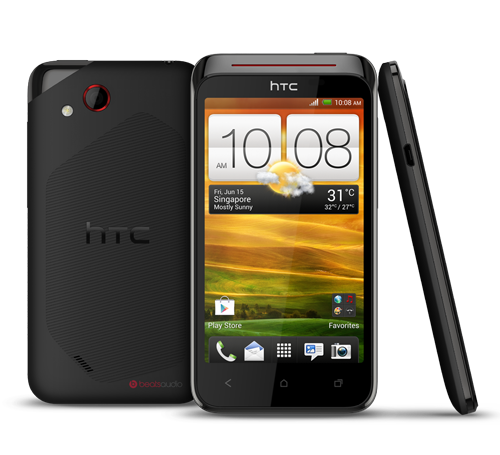
HTC launches Desire VC in India


Taiwanese cell phone maker HTC launched its new Smartphone, the HTC Desire VC in India on Sunday in partnership with TATA DOCOMO. The phone is priced at Rs 21,999.
The Desire VC dual SIM Smartphone sports a 4-inch screen having with of 480 x 800 pixels, 1GHz single core processor with HTC Sense UI 4.0 and an internal storage space of 4GB, which can be expanded up to 32GB using a microSD card.
Further, it has a 5 megapixel auto focus camera with Flash, a 3.5 mm stereo audio jack, 4.0 Bluetooth, WiFi and powered by a 1650 mAh battery. The phone weighs 118grm and comes pre-loaded with Android 4.0 Ice Cream Sandwich and 512MB RAM.
The sleek and handy HTC Desire VC phone is available in two color options, black and white. The phone is claimed to be the first Smartphone to provide its users with HSIA internet for smooth web browsing.
HTC has tied up with Tata DoCoMo for a range of lucrative service plans. So users can avail voice and data offers from Tata DoCoMo for both CDMA and GSM on postpaid or prepaid plans.
The Android phone was first launched through online retail portal Snapdeal, earlier this week.