Sunday, October 6, 2013

Building Strong Relationship with Customers


Selling to existing customers is far cheaper and easier than finding new ones. Use marketing to nurture customer loyalty through good service and quality products, backed up by a strong, lasting, mutual rewarding relationship. 

Customers today expect first-class service, and rightly so. Think about how you felt when you last received poor service. 

Disappointed? Angry? Cheated? 

This is exactly how your customers feel when they experience similar treatment.

Compare this with how you feel when you receive exceptional service. Remember that customers are not an irritation standing in the way of you and your work, they are your work. Without them you have no business. 

List areas where you feel that you can improve customer service. Look at how staff interacts with customers, how orders are processed, and how correspondence is dealt with. Tackle each area for improvement in turn.

Sunday, April 14, 2013

Think, What Really Makes People Buy?


It’s the ultimate question, isn’t it? You work hard at marketing to make contact with potential clients. Then you work even harder to get a chance speak with them about what you have to offer. But how do you actually get them to hire you? The answers may not be what you think.
1. Know-Like-and-Trust Factor – When making a buying decision about professional services, the number one factor clients consider is how much they know, like, and trust you. It’s more important than how much you charge or even how much they need you. What clients are asking is how much contact have they had with you? Did they recognize your name beforehand? Are you credible as a competent professional? Were you referred by someone they know?
You can influence this factor by focusing your marketing efforts on meeting clients through networking, referrals, and public speaking. If you haven’t had prior contact with prospective clients and weren’t referred, give them copies of any published work or media coverage you have, and provide them with client testimonials. Be prepared to stay in touch over a period of time so they can get to know you better.
2. Match between your offer and their needs – If you pass the first test of seeming credible and trustworthy, potential clients next look at how closely what you offer matches what they are looking for. Do they have a pressing need for your services? Do they understand exactly what it is that you provide? Do they grasp the benefits of working with you?
The best way to address this issue is to ask plenty of questions. The more you can find out about what the client needs, the better you can explain specifically how you can help. The biggest mistake professionals make when selling themselves is to offer themselves as a solution when they don’t yet know the problem. Be sure also to communicate the benefits of hiring you — not just what you do, but what the client gets as a result of what you do.
3. Justifying the purchase – An often neglected component of the buying decision is whether the client will be able to justify spending money on your services to their spouse, boss, board of directors, or even themselves. In business environments, this is critical. The purchaser must be able to support their decision to hire you with verifiable facts. When selling to consumers, keep in mind there may be a naysayer in the background who will need to be convinced of your value.
Give your prospects the evidence they need to justify your value to others. Provide statistics or examples of results achieved, money saved, or performance improved in your former projects. Share a case study, your client list, or a portfolio of your successes. Help them find the language they need to reassure everyone involved that hiring you is the most practical solution available to the problem at hand.
4. Price vs. budget – The last element prospective clients consider is the price. Yes, cost is important, but if they trust you, your offer is a good match for what they need, and they can justify hiring you, then the only significant issue about the price is whether they can find the money.

The next time you’re wondering why a sale isn’t going through, check how you’re doing on each of these four factors. See if you can discover the missing ingredients that will convince the client to buy.
The fastest way to turn a prospect into a client may be simply to change how you think about them.

Wednesday, January 23, 2013

CONTROL THE FREE-FALL


Do you sometimes feel a little bit out of control during your workday, wish you had more time to do the really important things or feel like you are doing a lot of wheel spinning on non-productive items? You are not alone.  Eighty-five percent of people in the workplace have similar complaints and part of the remedy is better control of our day through more effective Time Management.

For many of us, it is like the guy falling off the Empire State Building. While he is free-falling to a certain unpleasant collision with the pavement below, a co-worker pokes his head out the window at the 55th floor and inquires, “How's it going?” to which our free-falling friend replies, “Well, not too bad...so far!”

So it goes with many of our days, free-falling through the day, not in control of the events around us, spinning our wheels in an air of frustration that eventually sends us crashing into the pavement of missed deadlines, higher stress and lower productivity.

The answer is not to work harder but to work smarter.  Successful people do not necessarily put in more hours but, instead, work their time in a more efficient manner to get more done in less time. They control their time and understand that either they are in control or someone else is.

Planning is the most important step in effective Time Management.  Three easy rules can be followed to help you to significantly improve your productivity each day, which translates into getting more done in less time.

First, make a “to-do” list on a clean sheet of paper or in your day planner, such as a Day-Timer.  List all items you would like to complete today, if time permits.  Getting the items on paper gets them out of your head and in front of you. Having all items on one list helps to bring these items into control and avoids duplication and overlooking of important items.  One list also gives a clearer picture of the total amount of work to be done and allows for better scheduling.  Fewer things will slip through the cracks.

Second, prioritize the “to-do” list.  Select from the list the most important item to be done.  Ask yourself, “If I could only do one item today, which would it be?”  Put the numeral “1” to the left of that item.  Next, select the second most important item and label it “2.”  Continue the process labeling all items in numerical order.  As you start the day, begin with the first item on the list.  Complete it (around the interruptions that will inevitably come your way) and then go to the second item, then the third, etc.  You may not complete the list but you will always complete the most important items.  Making a “to-do” list is an important first step but prioritizing that list ensures that we focus on the more important items rather than giving in to the temptation of working on the less important items because they may stand out more or because they are easier to do.

Third, follow this process every day.  Wearing yesterday's dirty old shirt or fingering through yesterday's stale lunch is not too appealing.  So, just as you start the day with clean clothes and a new lunch, start with a new, prioritized “to-do” list.  Emotionally, it will give you a lift to start each day with the new plan, but, more importantly, it will give you a chance to reprioritize items left over from the day before.  For example, yesterday's item #9 may become today's item #1.  If you are working off yesterday's “to-do” list, that important item may not receive attention.  Daily planning will sharpen daily focus as priorities shift with each day.

These three rules will help you to significantly improve your performance each and every day and will help to reduce that free-falling feeling. You will find you are getting more done in less time and you will feel more productive and less stressed each day.  (And that is a good thing!)

Saturday, December 15, 2012

Delegation Dilemma


We all have 24 hours in each day, 7 days each week. (You probably knew that anyway.) If you multiply that out and if my math is correct, and I suspect it is because I’ve done the calculation a few times before, that totals 168 hours in a week. But then we have to subtract out time for sleep. Let’s use 8 hours per night, 7 nights per week (I know that might be high for a lot of people and maybe low for others, but we do spend about a third of our week dead), or a total of 56 hours. Subtract that 56 hours from 168 and now we’re down to only 112 hours per week to accomplish all we wish to do. If we chose to do everything ourselves, we will limit our potential because we are always hitting our heads on a ceiling of 112 hours. But what if we could plug into someone else’s time stream? What if we could get others to do things for us? Wouldn’t that increase our results? You bet. And all I’m talking about here is the concept of delegation.

Delegation is when you plug into someone else’s time stream when you don’t have the time or the expertise to do something, thereby increasing your own results.

Many feel they do not have the opportunity to delegate. “After all, I have no staff at work. I am the staff!” some will tell me. Yet, we are all delegators. Most have mail delivered to their homes. Any of us could go to the post office, rent our own postal box, and then each day take a trip to the post office to retrieve our mail. But most of us have made the decision that that is not the best use of our time so we have the letter carrier deliver our mail.

Maybe you went out for lunch yesterday at Burger King. You got a hamburger, fries, and a drink and paid $5 for that meal. How many people were involved in the production of that lunch to your plate? Probably hundreds, if not thousands. Someone had to plant the wheat to make the bread, someone had to pick the tomato to make the ketchup, and someone had to drill the oil out of the ground to power the delivery truck to your local Burger King. And if you paid $5 for this meal, everyone in this chain had to share in that $5, perhaps in fractions of a penny.

And I’m not trying to stretch delegation to some unreasonable application. This is exactly how the world worked up until about two hundred years age. All throughout the history of the world, if you wanted something, you had to produce it yourself. You wanted food? You didn’t pop over to your favorite restaurant. You had to grow it or kill it yourself. You wanted housing? You didn’t visit with your local real estate person. You went into the woods and cleared the land and built it.

In fact, if you look at the development of individual personal wealth from whenever they began to keep track up and through about 200 years ago, people 200 years ago were not a whole lot better off financially than their ancestors. And then from about 200 years ago to present times, individual economic wealth shot up through the roof because the Industrial Revolution permitted companies to mass-produce inexpensive products for the marketplace. This required payment of relatively good wages to workers so that they could afford to buy these products, so companies could make profits and produce more products.

If you and I had to do everything ourselves, create our food, clothing, housing, transportation, education, etc, the average person would probably lose 95% of what they have now or retain a mere 5% of what they have achieved.

So the question is not whether or not you delegate. We all delegate in ways that you perhaps had not considered. The better question to ask is, “How far do you want to go with it?” because delegation is the key to open the door to great success as we are forever hitting our heads against that ceiling of 112 hours available to us each week.

And now the “Delegation Dilemma.” The hardest part about delegation is not finding places to delegate. It’s simply letting go. We take great pride in doing things ourselves, don’t we? “If you want a job done right, you have to do it yourself,” we say often. That’s a nice thought and it would be a practical practice if we had unlimited amounts of time, but we don’t.

The starting point for delegation for me is each night in Daily Planning. As I look ahead to my next day and review all that I have to do and want to do, I look at each item and ask myself, “Is this the best use of my time?” If it is, I’ll plan to personally attack it. If not, I’ll try to figure out a way to delegate it and multiply my day tomorrow through the leverage of delegation.

Tuesday, November 20, 2012

40% Indian consumers research online before buying offline

Today, with approximately 13.7 crore internet users in the country, digital media has become a potential tool for consumer research before buying products and services offline. Moreover, consumers don’t only use this platform for search or social networking but also for utilitarian purposes. To understand the influence of internet on technology product purchases by buyers in-stores, Nielsen on behalf of Google India conducted a survey across 12 cities. The study interviewed 3,677 respondents outside 200 multi brand outlets and retail stores.
Google India’s Tech Shopper report claimed that over 40 per cent of the in-store purchasers in metros and Tier I and II cities use online research before making a decision and 69 per cent have already made up their minds about what model to buy and what not to before entering the store. For the record, the cities covered four metros, Chandigarh, Pune, Indore and Coimbatore for Tier I and Kanpur, Kochi, Vadodara and Bhubaneswar as part of Tier II cities. 86 per cent of the respondents included males across SEC A1 to SEC D and 92 per cent of the respondents were in the age group of 18 to 44 years out of which 34 per cent had already made the purchase.
Rajan Anandan, Managing Director and VP Sales Operations Google India

Rajan Anandan, Managing Director and VP Sales Operations Google India
The noticeable fact is that the maximum number of online purchase related researchers are in Tier II cities, which stands at a staggering 83 percent compared to metros which is 30 per cent lesser. Is it because of the lack of resources, middling incomes or the search for value for money? Even though the offline behaviour of consumers is changing due to the research done on the internet but is the e-commerce segment also making an impact on the buying behaviour? Rajan Anandan, VP and Marketing Director, Sales and Operations, Google India, says that the objective of the research was to understand offline purchasing behaviour. “E-commerce will grow but over the next three to four years most Indian consumers will do research online and they will buy offline. What has changed is that they have already made up their mind before they enter the store. Additionally, 70 per cent of Indian consumers today have made up their mind about the brand and model they want to buy before they walk into the store,” he adds.
With Google being a platform used by brands for SEM (Search Engine Marketing), how do brands leverage this factor to their benefit applying to consumer research and behaviour? Anandan has a different take on this aspect, he says that the spends in the industry is growing at a rate of 50 per cent and by 2015 the spends on this platform will cross Rs. 5,000 crore. Though he says that SEM is a very important part of the media mix of the more advanced advertisers in India today, most active brands, however, have multi communication online strategies. “It is not one platform that a brand needs to be on, search, social, video and mobile all come into play. Therefore, the more active brands especially in the technology category are present across multiple platforms and have very comprehensive paid earned strategies,” he adds.
About e-commerce he says that the segment is growing rapidly. “Industry sources write $ six billion as e-commerce revenue last year growing at 50 per cent, which means it will be $ nine billion plus next year and by 2015 it will be north of $ 30 billion,” he adds. E-commerce is growing but of a very small base, he says and further adds that out of the $ six billion ecommerce last year, travel was $ five billion and non travel was about a billion and electronics and technology was about a third of that.
According to the survey, more than 90 per cent of the users are looking for prices; about 55 per cent look for photos of the product and a little more than 20 per cent look for reviews online. The study also focuses on the price aspect of different products which buyers undertake. This shows that the research intensity increases for high value products. For example the research intensity increased when the price range exceeded Rs. 7,000 for mobile phones and Rs. 30,000 for laptops among others.
Medium of First AwarenessMetrosTier 1Tier 2
TV53%64%57%
Internet Ads23%17%12%
Newspaper Ads14%11%23%

According to Google, tablets are the fastest growing technology products in the search query growth category, bagging a 160 per cent compared to mobiles at 41 per cent. The top five brands that consumers search for online in the mobile category in descending order that Google claims is, Samsung, Nokia, iPhone, Sony and HTC. In the laptop category Dell leads followed by HP, Samsung, Lenovo and Acer and in the tablet category Apple iPad, Akash, Samsung, Micromax and HCL form the most researched names. This calibration of brands was done by Google for the period of January 2012 to October 2012.
Google also claims that tech products are the largest category after search in India. The report shows that there is a 39 per cent year-on-year growth from the period of January 2010 to September 2012. But is online research enough for a buyer? And is 39 per cent a large number for buyers who do internet research before buying? Conceivably that is the reason why there is still apprehension among the Indian consumer to buy tech products directly online. As per the claims of the report, 69 per cent of the customers like to have the touch and feel of the product after their ‘extensive’ research.

Source:http://pitchonnet.com/blog/2012/11/21/40-indian-consumers-research-online-before-buying-offline/

Thursday, November 1, 2012

A quarter of our teachers are very good. If you could make all the teachers as good as the top quarter, the India would sour to the top of that comparison. So can you find the way to capture what the really good teachers are doing?

It's amazing to me that more has not been invested in looking at how does that good teacher calm that classroom? How does that good teacher keep the attention of all those kids? We need to measure what they do, and then have incentives for the other teachers to learn those things.

Tuesday, October 23, 2012

New Media Marketing Consultant – Check Values First


Today, there are more media tools available today than ever before. They connect with consumers, deliver a message, and interact on a more personal level. Considering all the new media sources opening doors for businesses of all sizes to get their message across, navigation of the waters of social media and online marketing can be difficult. A New Media Marketing Consultant can help you to locate the media tools that are right for your business, and make the most of your efforts.
In addition to traditional media outlets, a New Media Marketing Consultant can also guide you through distribution of your message across:
• Use of articles, blogs and other written communication online
• Social networking sites such as Facebook, Twitter and LinkedIn
• Online video services such as YouTube
• Audio messages
How Does New Media Make a Difference? 
What do these new tools offer that traditional media do not? These tools are widely available to any business, not just those who can afford the high cost of television advertising – and they reach a wider audience, well beyond those who just read the newspaper or a specific magazine. New media marketing lets every business to readily access the same tools, and brings their message directly to the places where the audience is spending their discretionary time.
An effective New Media Marketing Consultant understands nuances in the changing marketplace and how all of the branches of new media distribution can truly create a level playing field for businesses small and large. No matter how your business is postured– whether newly formed or veterans of your industry, a New Media Marketing Consultant can help you distribute your message more effectively and reach your audience on new levels.
How New Media Distribution Moves Your Message 
Today, people of all ages are now turning to the internet for every purpose from medical advice to entertainment. The success of sites like Facebook and YouTube proves that people are using the internet to connect, to find information they need, and to discover new companies and products. Loyalty to a Brand is developed and expanded through Facebook Fan Pages, corporate pages where consumers can “like” their favorites and encourage their friends to do the same. Distribution of messages through online audio and video engages the audience and makes it easy for them to share the messages they enjoy at the simple click of a mouse. In turn, Twitter lets you pass on a message directly to your audience wherever they are, any time of day.
New media distribution disseminates your message to travel further, faster, and to more people than ever before. It gets the audience directly involved and not only shares the message, but makes the message interactive. It then becomes accessible to every business on every level.
What to Look for in a Media Marketing Consultant 
There are a few key things to look for when you decide to work with a media marketing consultant. The field has become flooded in recent years with people claiming to be social media experts, online marketing experts, and many similar titles. Finding a true media expert is not difficult, but requires a little research. A good New Media Marketing Consultant should:
• Have a strong online reputation
• Have a portfolio of websites and businesses they have worked for
• Provide references to previous clients who can vouch for their work
• Offer a solid timeline in which you can expect to see results from your efforts
• Be active in both the major social networking communities as well as the lesser known sites
With the help of an effective Media Marketing Consultant, you can harness the power of all of the new media as well as maintaining your message in traditional areas. Distribution of your message will gain momentum and you will reach more people than ever before.
Published on - Pitch, http://pitchonnet.com/blog/2012/10/22/new-media-marketing-consultant-check-values-first/

Tuesday, August 28, 2012

BRAND WITHOUT BRAND AMBASSADOR


“Popular actor Vikram is now the brand Ambassador for Parle-G.”

“Asin the new brand ambassador of Lux.”

“Ranbir Kappor is Nokia’s brand ambassador.”

“Shah Rukh Khan, new brand ambassador for Pepsodent.”

What role does a brand ambassador play in branding of a product?

Brand Ambassadors are like celebrities from outside world to lay men urging them towards the product; they personify the values of the brand and create aspirations. There is no denial that clever selection of brand ambassadors can really do wonders for some brands. But what really are the success factors having brand ambassador?

In this age and day product endorsement has taken many dimensions and one of these dimensions is the person who leverages on the credibility of his personality and following promote and providing greater visibility to a product, often with contracts by going as high as millions of dollars. But doing so this servers a tool that strengthens the company is communication strategy. These people are called brand ambassadors.

Although the exposure in this kind of marketing is less, the ambassadors deliver something much more strong and incredible. A word of mouth which people trust more than other died marketing techniques. A successful association with a brand ambassador sometime translates into stronger brand awareness campaign than millions of rupees spent on other marketing efforts such as advertising and promotion.

Now the question is why to use a brand ambassador? What actually is the power that brand ambassador exerts over the consumers to urge them?

One of the most important factor that attracts consumer’s mind is psychological factors such as motivation, perception, learning, believes and attitude. And these are the factors that a brand ambassador influences.

These people have such a strong impact of personalities that people sometime use brand 
ambassador as a tool for their product, like we seen the case of Junaid Jamshed clarifying Lays issue when it was hit by the accusation of using haram contents in its manufacturing.

Now companies need to take keen care while appointing celebrity to endorse a product, in all respect from thinking perspective of public to the requirement of the product. It is essential that the attributes of a celebrity like ability, fame, sincerity etc. Match the brand identity or the result mismatch will do more harm than good to the brand image.

Like Wasim Akram endorsing PEPSI and being diabetic at the same time and publicizing accu meters is not fully appreciated. PEPSI must have reckoned the damage of this to PEPSI’s image.

To me an ideal brand ambassador should be a loyal user of brand by choice (not like Shah Rukh Khan for Colgate), not by the opinion of others but by his own wisdom. He talks about the benefits and disadvantages of the brand, he promotes the brand wherever he can without knowing. He is the golden loyal customer which a brand should strive to find. This is the sort of loyal customer, which if given incentives to publicize a product would do an honest job.

This can be an example of ideal, true hardworking brand ambassador. May be one day we will see ordinary people will like us endorsing products like celebrities from a fantasy world but what will be the point of marketing then!

After all its all about who gets most attention.

Tuesday, August 21, 2012

TIME, CNN suspend Journalist Fareed Zakaria


The US magazine Time’s editor Fareed Zakaria, who is the television host on CNN, has been suspended for using several paragraphs by another writer for his column in Time's August 20 issue.
The Indian-American journalist Zakaria has been suspended by both the magazine and the TV network CNN following his apology on Friday. In a statement he admitted his fault, saying he made a terrible mistake. "It is a serious lapse and one that is entirely my fault", he said. 
In a separate statement, Time spokesman Ali Zelenko said the magazine accepts Zakaria's apology, but would suspend his column for one month, "pending further review". 
"What he did violates our own standards for our columnists, which is that their work must not only be factual but original; their views must not only be their own but their words as well," Zelenko said.
Zakaria was criticised for his column about gun control that published in Time's August 20 issue. It was alleged that the paragraphs of the article on the same subject were written before by Harvard University history professor Jill Lepore in The New Yorker magazine's April issue. 
The column titled 'The Case for Gun Control' began with the sentences "Adam Winkler, a professor of constitutional law at UCLA, documents the actual history in 'Gunfight: The Battle Over the Right to Bear Arms in America'. Guns were regulated in the US from the earliest years of the Republic". 
Lepore's article titled "Battleground America," begins with the paragraph, "As Adam Winkler, a constitutional-law scholar at UCLA, demonstrates in a remarkably nuanced new book, 'Gunfight: The Battle Over the Right to Bear Arms in America,' firearms have been regulated in the United States from the start".

Source: breakingnewsonline.net

Thursday, August 9, 2012

Google extends Online Searches to Gmail


In a bid to provide better and improved search option, the search engine giant Google has recently added some really interesting features to its Google search. Now, the Google search result will also provide texts from web-based email service Gmail.
"Sometimes the best answer to your question isn't available on the public web, it may be contained elsewhere, such as in your email, we think you shouldn't have to be your own mini search engine to find the most useful information; it should just work." Google search senior vice president Amit Singhal said in a blog post.
Of course the new feature has not completely taken shape. Google invited people to visit google.com/experimental/gmailfieldtrial to sign up to take part in the new feature. Google wants to provide the answer to the actual query, a user digs for.
However, the trial was limited to English language searches and messages in Gmail accounts.
The up-gradation of Google search also bears other interesting and useful features.  The enhancements under development include a feature for organizing air travel confirmation emails so that a query of "my flights" would serve up results that include a to the point list of bookings.
Singhal further mentioned that these are all baby steps and they are going to provide bigger options in the coming days.

Tuesday, August 7, 2012

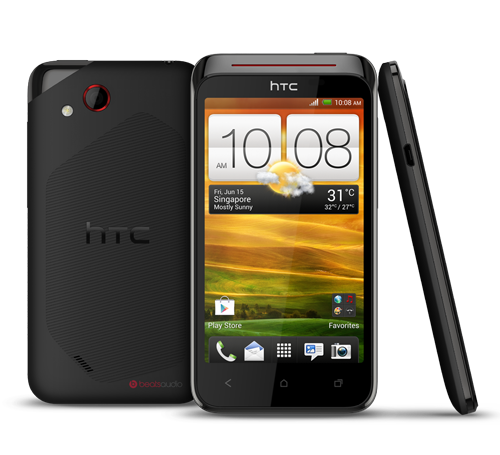
HTC launches Desire VC in India


Taiwanese cell phone maker HTC launched its new Smartphone, the HTC Desire VC in India on Sunday in partnership with TATA DOCOMO. The phone is priced at Rs 21,999.
The Desire VC dual SIM Smartphone sports a 4-inch screen having with of 480 x 800 pixels, 1GHz single core processor with HTC Sense UI 4.0 and an internal storage space of 4GB, which can be expanded up to 32GB using a microSD card.
Further, it has a 5 megapixel auto focus camera with Flash, a 3.5 mm stereo audio jack, 4.0 Bluetooth, WiFi and powered by a 1650 mAh battery. The phone weighs 118grm and comes pre-loaded with Android 4.0 Ice Cream Sandwich and 512MB RAM.
The sleek and handy HTC Desire VC phone is available in two color options, black and white. The phone is claimed to be the first Smartphone to provide its users with HSIA internet for smooth web browsing.
HTC has tied up with Tata DoCoMo for a range of lucrative service plans. So users can avail voice and data offers from Tata DoCoMo for both CDMA and GSM on postpaid or prepaid plans.
The Android phone was first launched through online retail portal Snapdeal, earlier this week.

Monday, August 6, 2012

LK Advani raises pitch for 2014 Polls


BJP veteran LK Advani has shocked the nation by triggering a bid debate in the political arena through his blog. Advani's anti-Modi stand was clear from his writing, as he predicted a non-Congress, non-BJP Prime Minister aftermath 2014 polls.

Advani said that the Congress Party would get less than 100 seats in 2014. As per his claims, the BJP would get good number of seats, but neither of the parties would be able to form the government without outside support.
The BJP veteran also said that no third front government is possible in India without the support of the Congress or BJP. He also categorically said that a non-BJP, non-Congress may be installed at the Centre in 2014.
Advani's statement came amidst talks of a secret meeting between Bihar CM Nitish Kumar and BJP President Nitin Gadkari. Nitish reportedly told Gadkari in clear terms that NDA should name a person with secular credential as the Prime Minister. Gadkari assured Nitish that all NDA allies will be consulted before the BJP finalises a name.
Advani is being seen as anti-Modi after the latter gained importance within the party. The BJP veteran did not want Narendra Modi to rise to such a stature from where it would be impossible to dislodge him. That could be the reason why he is hinting at a non-BJP Prime Minister, as he knows majority of the leaders and cadres within the party want to see Narendra Modi as the next PM of the country.

Monday, July 30, 2012

Persuasive Manager: Rajesh Khanna’s (un)lucky home

Persuasive Manager: Rajesh Khanna’s (un)lucky home


Dear Dr. Monippally,

Let me share my views on this topic. People who believe that fate and chance control their lives are more likely to be superstitious -- but when faced with death they are likely to abandon superstition altogether. The word 'superstition' has a Latin origin, which means 'standing in awe'. People and cultures around the world assign different meaning or importance to events, actions and things. They feel that one can affect the situation, to reflect their own interest. The answer lies within the power of the Subconscious Mind and The Law of Attraction.

The same case was happened with Rajesh Khanna and his home. Plain and simple - whatever we believe to be true is true. So if we believe that the number 13 is "unlucky” or that by failing to form a specific action or ritual some negative experience will arise, then so shall it be.
As per Dimple Kapadia’s statement in 2003, she said that “a person without Love is a person without foundation; it will just collapse like a pack of card”. And that secret card I found in Rajesh. He was a person and he is selfish which lead him to a lack of self-confidence which leads to fear. He often think of oneself's first; a lack of confidence makes him depend on external power/circumstance instead of using the power within; He was a person in fear without Love within.
Rajesh Khanna's most horrible enemies were the sycophants in his lifetime. They created the destructive genie which lurks within but is kept in leash by most of us. Not so with 'Kaka', as the actor was commonly known. He allowed his ego full play and, at a later date, even rued his lifestyle; but, by then, it was too late. He had estranged his well-meaning lady friends, his old schoolmates, his aides, servants and relatives.
Rajesh Khanna's worst enemies were his arrogance and self-indulgence. He was a poor listener, always bent upon dominating the lives of his dear and loved ones. He had mood swings and could be very kind to someone at one moment and an utter miser in the next moment. The constant refrain around him touting his superstar image had turned his head and he could no longer lead a proper private life. He became consumed by an overpowering need to be surrounded by fawning flatterers at all times.
In March 30, 2012 The Economic Times published a story on “Why businessmen around the world are so superstitious” and it was written by Prof. V Raghunathan (Ex. Prof. at IIM Ahmedabad and now at present CEO of GMR Varalakshmi Foundation). He has mentioned that “Businessmen have reasons to be more superstitious than the average. This is because given the very high stakes and the tremendous amount of uncertainties in the market, superstitions offer an illusion of gaining control over these uncertainties and give them an impression as if they have done all that is possible to ensure the best possible outcome.
Businessmen in India are frequently given to such superstitions as numerology, visits to temples before big business deals, avoiding any important initiatives around eclipses, designing offices according to Vaastu, and so forth. Worldwide, the number 13 is considered spooky, but GD Birla was said to be uncomfortable with the number 12 because it reminded him of baarvi, or the 12th day of mourning, considered inauspicious by the Hindus. Post-independence, when GD Birla built the group's global headquarters in Kolkata, he chose not to have a 12th floor. Superstition is a worldwide phenomenon. Some 80% of the buildings worldwide are known to skip floor 13.
Larry Ellison is said to have tweeted that there may not be an Oracle version 13. Superstition is known to impact businesses. It is said that marriage insurance in India is doomed to failure, because people don't want to think about marriages failing, because thinking it could make it happen. In Taiwan, consumers are willing to pay more for a package of three tennis balls than four, because in Mandarin, number four is considered ill-fated, as it has the same sound as 'dead'. Even in the US, 'paraskevidekatriaphobia' - the fear of Friday the 13th - is known to pull down revenues.”

Male Students to wear Skirts at Oxford University


World's renowned educational institution Oxford University has introduced a new academic dress code for its students. As per the new regulations, male students will wear skirts and women will be in suits or white bow ties during formal occasions and examinations. 

The new dress code will certainly please the transgender student community at the University. Under the revised guidelines, female students will wear a dark skirt or trousers, a white blouse, a black ribbon tied in a bow at the neck, black stockings and shoes, while male students will have to wear skirts or stockings for formal occasion and exams. 

The students will be punished by the University authorities for breaching the rules. The disobedient students might be rusticated or suspended for a period of time if found violating the strict laws of the varsity.

The authorities made it clear that students are required to dress appropriately under the revised dress code. The new rule will be applicable from next month. 

Earlier, under the old regulations, the male students were wearing a dark suit with dark socks, black shoes, a white bow tie, and a plain white shirt and collar beneath their black gowns when attending formal occasions such as examinations. 

However, with the new and distinct dress code, there will be no more confusion to know boys and girls. The reforms were made following a campaign by the student union, which demanded appropriate dress code for men and women at the premises as the old regulations did not serve the interests of transgender students. 

According to a report by the 'Daily Mail', Jess Pumphrey, the union's Lesbian, Gay, Bisexual, Transgender and Queer executive officer, said "there was 'an active transgender community' in Oxford, and every member she had spoken to "had found sub-fusc, under the old regulations, to be stressful".

Thursday, July 26, 2012

Oprah Winfrey draws Flak for Comments on Indians


American popular talk show host and philanthropist Oprah Winfrey has recently landed in trouble for her comments on the TV talk show “Oprah’s Next Chapter” India Special. The show was premiered on Discovery Channel India recently, which has been criticized for being ‘snobbish’ and ‘ignorant.’
Oprah Winfrey visited India to film an India special episode for her popular talk show ‘Oprah's Next Chapter’. The show was aired on Discovery Channel and its affiliate TLC over the weekend, but her point of View towards India as presented in the show earned flak from top Indian media houses. Out of the incidents during her visit to India early this year Winfrey’s visit to a Mumbai slum, and her spending time with Bollywood biggies was exhibited in the show. In that party she asked “I heard some Indian people eat with their hands still?” 
This statement of Winfrey has been hugely criticized and she has been tagged for being snobbish and ignorant. Criticizing Oprah’s perspective for India while leading news channel CNN-IBN posted an “open letter to Oprah Winfrey from an Indian who eats with her hand”, online news site Firstpost.com described the two-episode series as “myopic, unaware, ignorant and gauche. This was Middle America at its best worst.” Also Dainik Bhaskar posted the headline “Snobbish Oprah Mocks India.”